
Beginners Guide
Starting your journey into the world of dollhouse miniatures is exciting, creative, and easier than many people think. Whether you dream of building an elegant Victorian mansion, a cozy cottage, or a modern tiny home, every experienced miniaturist started with a single project.
The key is to begin with manageable goals, learn a few basic techniques, and enjoy the process. Miniature making combines craftsmanship, creativity, problem-solving, and artistic expression into one rewarding hobby. There is no "right" way to build miniatures—only the way that brings you the most enjoyment.
Step 1: Choose the Right Scale
One of the first decisions you'll make is selecting the scale you want to build in. Scale simply refers to how much smaller the miniature is than the real object.
Why Most Beginners Choose 1:12 Scale
The most popular scale for beginners is 1:12 scale, where 1 inch equals 1 foot in real life.
Benefits include:
- Largest selection of kits and furniture
- Thousands of online tutorials
- Easier to see and work with small details
- Widely available building materials
- Strong online community for support
If you're just getting started, 1:12 offers the easiest learning curve.

Other Popular Dollhouse Scales
- 1:6 Scale – Fashion dolls and larger display pieces
- 1:24 Scale – Half-scale dollhouses that save space
- 1:48 Scale – Quarter-scale miniatures for advanced builders and collectors
If you're unsure which scale is right for you, visit our Dollhouse Scale Explained and Scale Calculator and to learn more and compare common sizes and convert real-world measurements into miniature dimensions.

Step 2: Start Small (Really Small!)
One of the biggest mistakes beginners make is purchasing a large dollhouse before learning basic skills.
Instead, build confidence by completing one small project at a time.
Great beginner projects include:
- A room box
- A single room
- A side table
- A bookshelf
- A chair
- A picture frame
- Kitchen accessories
- Miniature books
- Plants
- Food miniatures
- Wallpaper and flooring projects
These smaller projects help you practice measuring, painting, cutting, gluing, and finishing without feeling overwhelmed.
Every completed project builds confidence for the next one.
Step 3: Learn the Essential Skills
Miniature making combines techniques from several different hobbies. Fortunately, none of them are difficult to learn with practice.
Gluing and Assembly
Different materials require different adhesives.
You'll eventually use glues for:
- Wood
- Paper
- Fabric
- Plastic
- Metal
Learning which glue works best for each material saves frustration later.
Focus on these core skills first:
Measuring and Cutting
Accurate measurements are the foundation of every successful miniature.
Practice:
- Reading rulers
- Measuring twice before cutting
- Using a hobby knife safely
- Cutting wood, cardstock, and chipboard
Painting and Finishing
Good paint can completely transform a project.
Learn how to:
- Prime surfaces
- Apply thin paint coats
- Dry brush textures
- Weather wood
- Create realistic finishes
Basic Woodworking
You don't need a workshop.
Many beautiful miniatures are built using:
- Basswood
- Balsa wood
- Craft sticks
- MDF kits
- Thin plywood
Simple cuts and square joints go a long way.
Fabrics and Upholstery
Miniature fabrics add warmth and realism.
Begin with:
- Pillows
- Curtains
- Rugs
- Cushions
- Simple upholstered chairs

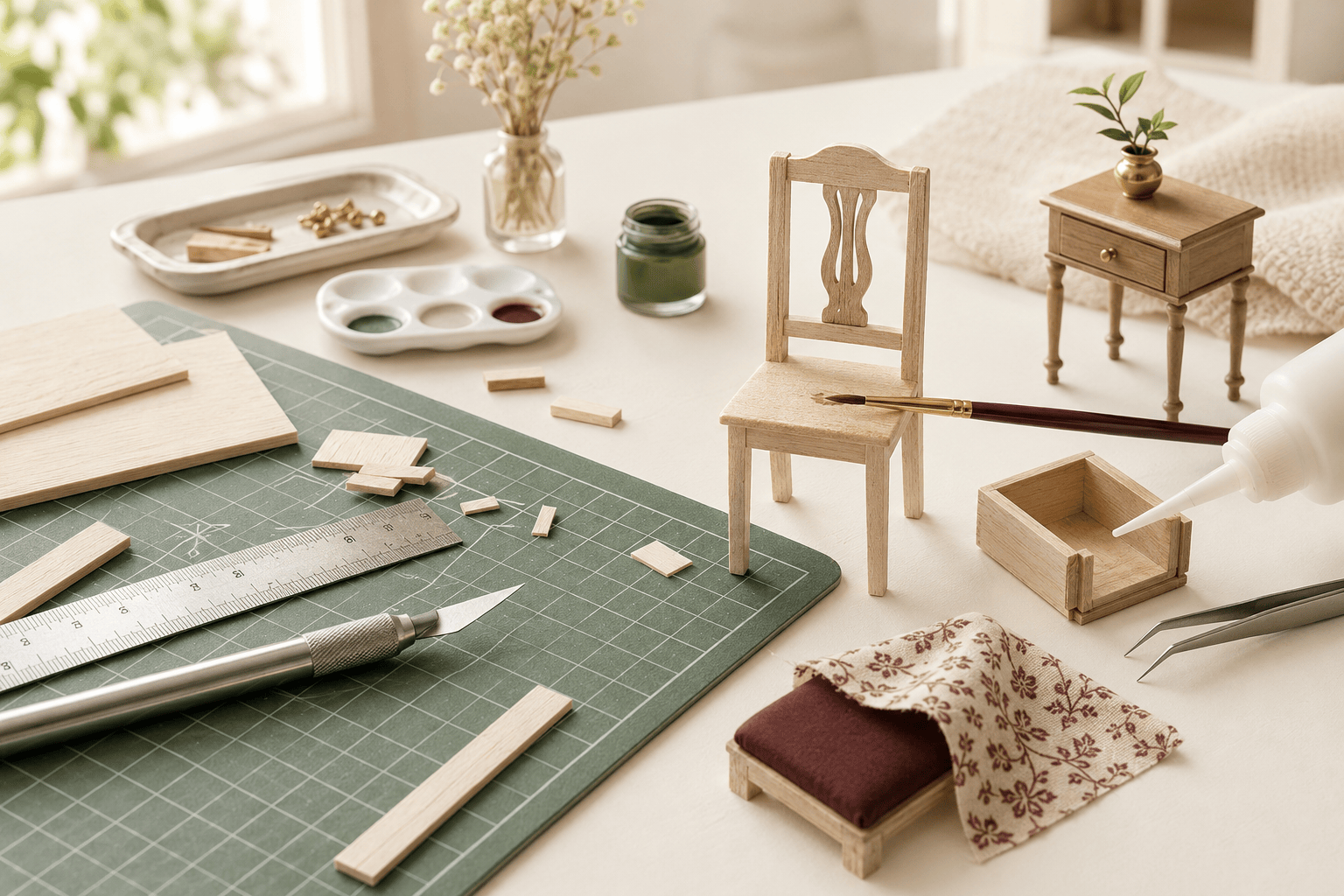

Step 4: Build a Comfortable Miniature Workspace
You don't need an entire craft room.
A small desk or folding table can become an excellent miniature workshop.
Helpful additions include:
- Bright LED lighting
- Self-healing cutting mat
- Storage drawers
- Small containers for beads and hardware
- Magnetic trays for tiny parts
- Label maker for organizing supplies
Keeping tools organized makes every project more enjoyable.
Step 5: Build Your Basic Tool Kit
You don't need expensive equipment to begin.
A simple starter toolkit includes:
- Metal ruler
- Self-healing cutting mat
- Craft knife
- Replacement blades
- Fine tweezers
- Small clamps
- Sandpaper
- Mini files
- Small paint brushes
- Pin vise
- Small scissors
- Cutting square
- Pencil
- Glue applicators
Buy quality where it matters—especially your knife, ruler, and cutting mat.


Step 6: Learn From the Experts
One of the fastest ways to improve is by following experienced miniature artists. Many offer free beginner-friendly tutorials that cover everything from cutting techniques to full dollhouse construction.
Here are some excellent places to start:
Beginner-Friendly YouTube Channels
- Bentley House Minis – Clear, encouraging tutorials on room boxes, furniture, and DIY décor.
- Square to Spare – Creative builds using affordable craft materials.
- The Square to Spare Miniatures – Great for beginners who enjoy making realistic accessories.
- The Mini Time Machine Museum – Inspiring videos showcasing museum-quality miniatures and craftsmanship.
- Craftsman Miniatures – Helpful demonstrations on woodworking and building techniques.
Search YouTube for beginner playlists from these creators to find step-by-step projects suitable for first-time builders.
Step 7: Learn from Trusted Manufacturers
Many miniature companies publish free tutorials, project ideas, and product guides alongside their catalogs.
Excellent beginner resources include:
- Greenleaf Dollhouses — Building tips, assembly guidance, and affordable dollhouse kits.
- Real Good Toys — Dollhouse plans, beginner kits, and construction advice.
- Miniatures.com — Thousands of supplies plus educational articles and project inspiration.
- Hobby Lobby — Affordable craft materials useful for miniature projects.
- Michaels — Beginner tools, paints, wood, and seasonal supplies perfect for miniatures.
- Houseworks Ltd. — Windows, doors, stair parts, trim, and architectural components.
- The Dollhouse Emporium — UK-based tutorials, kits, furniture, and beginner advice.
Many of these companies also maintain blogs, downloadable project guides, and instructional videos that are ideal for learning new techniques.


Step 8: Join the Miniature Community
Miniature making is one of the most welcoming hobby communities you'll find.
Consider joining:
- Local miniature clubs
- Facebook groups
- Reddit communities
- Online forums
- Live virtual workshops
- Miniature shows and conventions
Seeing other builders' work is one of the best ways to stay inspired and continue learning.
Don't hesitate to ask questions—miniaturists love sharing their knowledge.
Remember: Every Expert Was Once a Beginner
Every beautifully crafted dollhouse started with a first cut, a first glued joint, and a first finished project.
Be patient with yourself. Experiment with new techniques. Learn from mistakes. Celebrate each completed project, no matter how small.
Most importantly, enjoy the journey.
Miniature making isn't about perfection—it's about creativity, imagination, and bringing tiny worlds to life, one project at a time.
Beginner Tips You'll Wish You Knew Earlier
- Measure twice, cut once.
- Dry-fit pieces before gluing.
- Use less glue than you think you need.
- Keep a notebook of paint colors and dimensions.
- Save scraps—you'll use them later.
- Don't compare your first project to someone else's hundredth.
- Take photos of your progress—you'll be amazed how quickly your skills improve.
Recommended Beginner Books
If you enjoy learning from books, these classics are excellent additions to your library:
- Making Doll's House Miniatures with Style
- The Complete Book of Dollhouse Miniatures
- Making Miniature Food and Market Stalls
Many local libraries also carry miniature and dollhouse crafting books, making them a great way to explore different techniques before purchasing your own copies.