
Let’s Talk Building Miniature Furniture
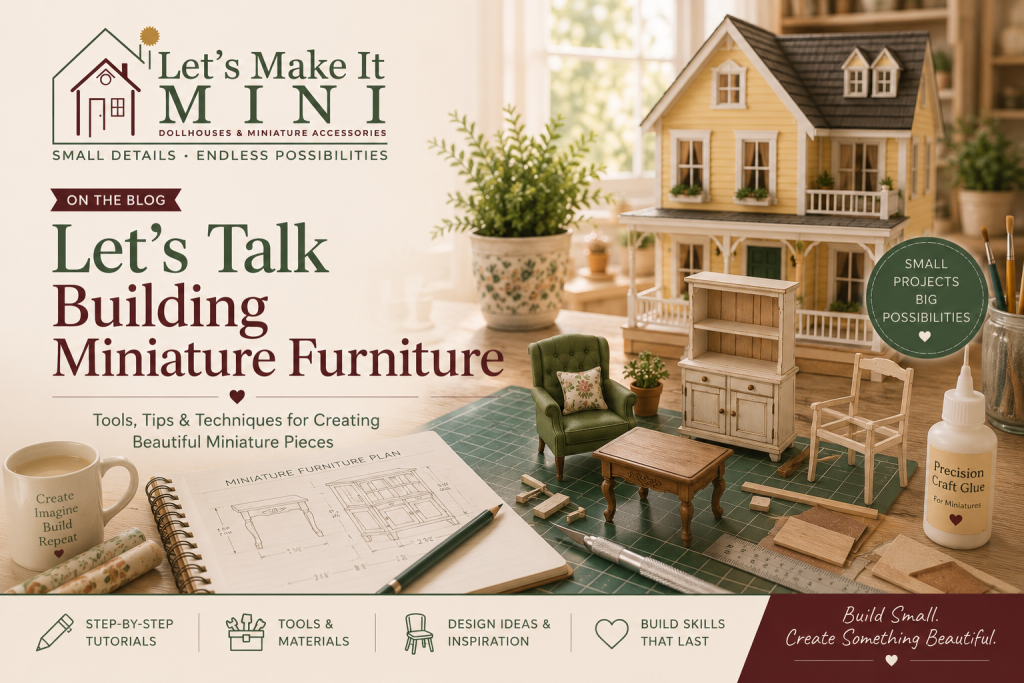
A Beginner's Guide To Making Miniatures
Furniture building is one of the most rewarding parts of the dollhouse hobby. Whether you enjoy recreating historical pieces, modern farmhouse décor, or tiny replicas of everyday furniture, working in 1:12 scale allows makers to bring real-life craftsmanship into miniature form.
In a 1:12 scale dollhouse, one inch equals one foot in real life. This standard scale creates realistic proportions while still leaving enough room for detailed craftsmanship and creativity.
From selecting the right wood to choosing glues, stains, and finishes, this guide covers the essentials for building beautiful and realistic miniature furniture.
What is 1:12 Scale?
1:12 scale is the most common dollhouse scale used by hobbyists and miniature artisans.
- 1 inch in miniature = 12 inches in real life
- A 6-foot sofa becomes 6 inches long
- A standard kitchen table becomes approximately 2.5 inches tall
Understanding scale is critical because even small measurement errors become obvious in miniature work.
Why Scale Matters
An accurate scale creates realism. Furniture that is too thick, oversized, or bulky immediately looks toy-like instead of realistic.
Good miniature furniture builders pay close attention to:
- Wood thickness
- Hardware size
- Fabric patterns
- Paint finishes
- Furniture proportions
Tiny details make a huge difference.
Essential Tools for Building Miniature Furniture
The good news is you do not need a full woodworking shop to get started.
- Basic Hand Tools
- Precision craft knife
- Self-healing cutting mat
- Metal ruler
- Mini clamps
- Fine-tip tweezers
- Needle files
- Small square
- Pin vise hand drill
- Sanding sticks and fine-grit sandpaper
- Power Tools (Optional but Helpful)
- Mini table saw
- Rotary tool
- Scroll saw
- Mini belt sander
- Drill press
These tools improve precision and speed, especially when producing multiple pieces.
Common Supplies Used in Miniature Furniture Building
Miniature builders use many of the same materials as full-size furniture makers—just scaled down.
Typical Supplies:
- Basswood sheets
- Strip wood
- Veneers
- Wood dowels
- Cardstock
- Upholstery fabric
- Beads and findings for knobs or hardware
- Mini nails and pins
- Acrylic paints
- Wood stains
- Matte and satin sealers
Choosing quality materials helps miniature furniture look more realistic and last longer.
Types of Wood Commonly Used in Miniatures
Different woods behave differently when cut, stained, or painted. Understanding their characteristics helps you choose the right material for each project.
Basswood
Basswood is the most popular wood for miniature furniture.
Pros
- Soft and easy to cut
- Sands smoothly
- Excellent for beginners
- Takes paint well
- Widely available
Cons
- Dents easily
- Grain can be minimal for stained finishes
- Best Uses
- Painted furniture
- Cabinets
- Tables
- Beginner projects
Birch Plywood
Birch plywood offers excellent strength and stability.
Pros
- Strong and durable
- Resists warping
- Great for structural pieces
Cons
- Edges may require finishing
- Harder to cut than basswood
- Best Uses
- Cabinet boxes
- Floors
- Shelving
- Structural furniture components
Walnut
Walnut is prized for its luxury miniature furniture.
Pros
- Rich natural color
- Beautiful grain
- Excellent for stained finishes
Cons
- More expensive
- Harder wood requires sharper tools
- Best Uses
- Fine furniture
- Traditional styles
- High-end display pieces
Maple
Maple is commonly used when builders want a smooth, modern appearance.
Pros
- Very smooth grain
- Durable
- Clean contemporary appearance
Cons
- Can be difficult to stain evenly
- Harder to shape by hand
- Best Uses
- Modern furniture
- Contemporary cabinetry
- Painted finishes
Realism in Miniature Furniture
The difference between toy furniture and realistic miniature furniture often comes down to scale accuracy and finishing details.
Tips for Realism
- Use Thin Materials
- Oversized wood thickness is one of the most common beginner mistakes.
- Add Texture Carefully
- Wood grain, fabric texture, and metal finishes should appear proportional to scale.
- Avoid Heavy Paint
- Thick paint fills details and makes furniture look plastic.
- Include Realistic Wear
- A small amount of distressing or aging can make pieces feel authentic.
- Use Proper Hardware
- Tiny hinges, pulls, and knobs dramatically improve realism.
Paints and Stains for Miniatures
Finishing miniature furniture requires lighter application techniques than full-size furniture.
Acrylic Paints
Acrylics are the most popular option.
Benefits:
- Fast drying
- Easy cleanup
- Wide color range
- Excellent for detailed work
- Best Practices
- Thin slightly for smoother coats
- Apply multiple light coats
- Sand lightly between layers
Chalk Paints
- Benefits
- Matte finish
- Easy distressing
- Great coverage
- Drawbacks
- Can obscure detail if applied too heavily
Chalk paints are excellent for farmhouse or vintage styles.
Wood Stains
- Popular Stain Colors
- Walnut
- Golden Oak
- Cherry
- Ebony
Stains highlight natural wood grain and create realism.
Tips
- Test stain on scrap wood first
- Use light coats
- Wipe excess immediately
Sealers and Top Coats
Protective finishes help preserve miniature furniture.
- Common Finishes
- Matte polyurethane
- Satin varnish
- Wax finishes
- Spray acrylic sealers
Matte and satin finishes generally look more realistic than high gloss.
Choosing the Right Glue
Glue selection matters more than many beginners realize.
PVA Wood Glue
The most common choice for wood furniture.
Pros
- Strong bond
- Dries clear
- Easy cleanup
Cons
- Longer drying time
- Best Uses
- Wood-to-wood joints
CA Glue (Super Glue)
Useful for fast assembly.
Pros
- Instant bonding
- Excellent for tiny parts
- Small details
- Metal hardware
- Quick repairs
Cons
- Brittle over time
- Easy to accidentally glue fingers together
Tacky Glue
A favorite among miniature hobbyists.
Pros
- Thick consistency
- Less dripping
- Good grab strength
- Best Uses
- Fabric
- Mixed materials
- Decorative elements
Cons
- Slow Drying Compared to CA (Super Glue)
- Not Ideal for Non-Porous Materials
- Can Warp Thin Materials
- Initial Grab Isn't Always Strong Enough
- Not Waterproof
- Visible Glue Marks if Overapplied
Handmade vs. Purchased Dollhouse Furniture
Many hobbyists eventually ask whether they should build furniture themselves or purchase ready-made pieces.
Pros of Making Your Own Furniture
- Complete Customization
- You control style, dimensions, color, and finish.
- Greater Realism
- Handcrafted pieces often look more authentic.
- Creative Satisfaction
- Building miniatures is rewarding and relaxing.
- Cost Savings on Large Projects
- Materials can be cheaper than premium handmade furniture.
Cons of Making Your Own Furniture
- Time Intensive
- Detailed miniature work takes patience.
Tool Investment
Quality tools can become expensive.
Learning Curve
Precision cutting and scaling require practice.
Pros of Purchasing Furniture
- Saves Time
- Perfect for quickly furnishing a dollhouse.
- Professional Quality
- High-end artisan furniture can be museum-quality.
- Ideal for Beginners
- Allows new hobbyists to focus on decorating.
Cons of Purchasing Furniture
- Higher Cost
- Handmade artisan pieces can be expensive.
- Limited Customization
- Finding exact sizes or styles may be difficult.
- Less Personal Connection
- Many builders enjoy creating furniture themselves.
What I Use for Miniature Furniture
These are supplies I use at my own miniature worktable. Choose the thickness that suits your project—you don’t need to buy everything to get started.
As an Amazon Associate I earn from qualifying purchases.
For furniture assembly: I prefer Aleene’s Original Tacky Glue.
See Aleene’s Original Tacky Glue on Amazon (paid link)
For the main furniture pieces: I use Ninekong 1/8-inch basswood plywood for furniture bases, doors, faces, and frames. These sheets measure 12 × 12 inches.
See Ninekong 1/8-inch basswood plywood on Amazon (paid link)
For finer finishing details: I use Ninekong 1/16-inch basswood plywood for inlays, finishing layers on furniture tops or faces, molding, and framing. These sheets also measure 12 × 12 inches.
See Ninekong 1/16-inch basswood plywood on Amazon (paid link)
My finishing order: When I’m painting furniture, I assemble it first. When I’m staining, I stain the pieces before assembly. Dried glue on exposed wood can prevent stain from absorbing evenly, leaving pale patches. Keep joining surfaces bare for gluing, and carefully remove any excess glue.
Check the actual sheet thickness before cutting pieces that need a precise fit.
Final Thoughts
Building miniature furniture in 1:12 scale combines woodworking, design, painting, and artistic detail into one incredibly rewarding hobby. Whether you prefer rustic farmhouse tables, elegant Victorian cabinets, or sleek modern furniture, the materials and techniques you choose will shape the realism and quality of your finished pieces.
Start simple, focus on an accurate scale, and practice clean finishing techniques. Over time, your miniatures will become increasingly realistic—and uniquely your own.
The beauty of miniature craftsmanship is that every tiny detail tells a story.
DOWNLOAD our free Infographic for quick reference.
