
Your Beginner's Guide to Dollhouse Miniatures
Welcome to Let's Make It Mini! Whether you're dreaming of building your first dollhouse, creating miniature furniture, or collecting tiny treasures, you've come to the right place. This page is designed to help beginners understand the basics of the miniature hobby and provide the knowledge needed to start creating with confidence.
Miniatures combine creativity, craftsmanship, and imagination into a rewarding hobby enjoyed by people of all ages. From simple room boxes to elaborate dollhouses filled with handmade furniture and accessories, there is always something new to learn and create.
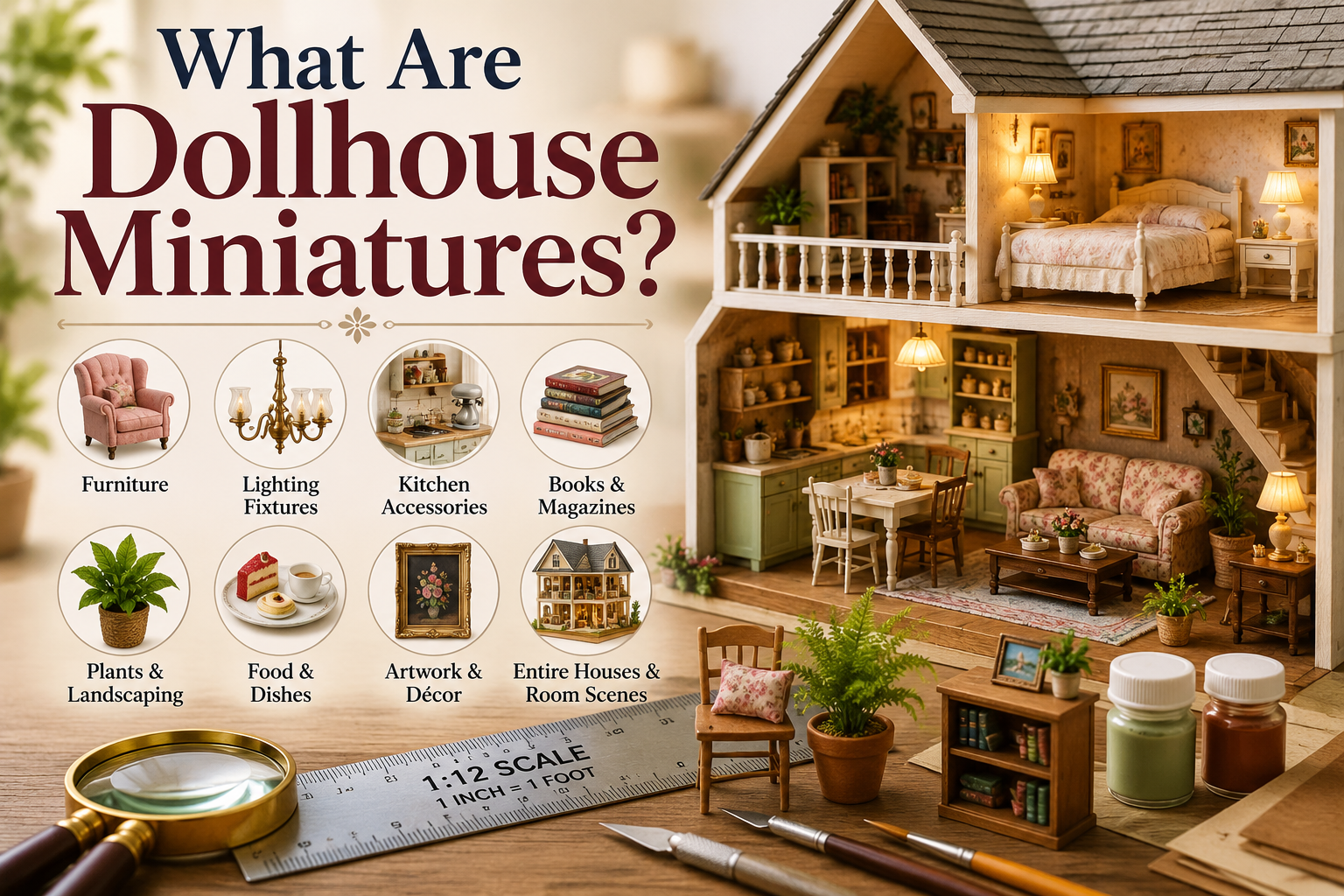
What Are Dollhouse Miniatures?
Dollhouse miniatures are scaled-down replicas of real-life objects, furniture, buildings, and accessories. They are designed to recreate everyday life in miniature form, often with incredible attention to detail.
Many hobbyists enjoy collecting professionally made miniatures, while others prefer building and crafting their own pieces from wood, paper, fabric, clay, and recycled materials.
One of the most popular scales in the hobby is 1:12 scale, where one inch in the miniature world equals one foot in real life. This scale offers a perfect balance between detail and display space, making it ideal for beginners.
Miniatures can include:
- Furniture
- Lighting fixtures
- Kitchen accessories
- Books and magazines
- Plants and landscaping
- Food and dishes
- Artwork and décor
- Entire houses and room scenes
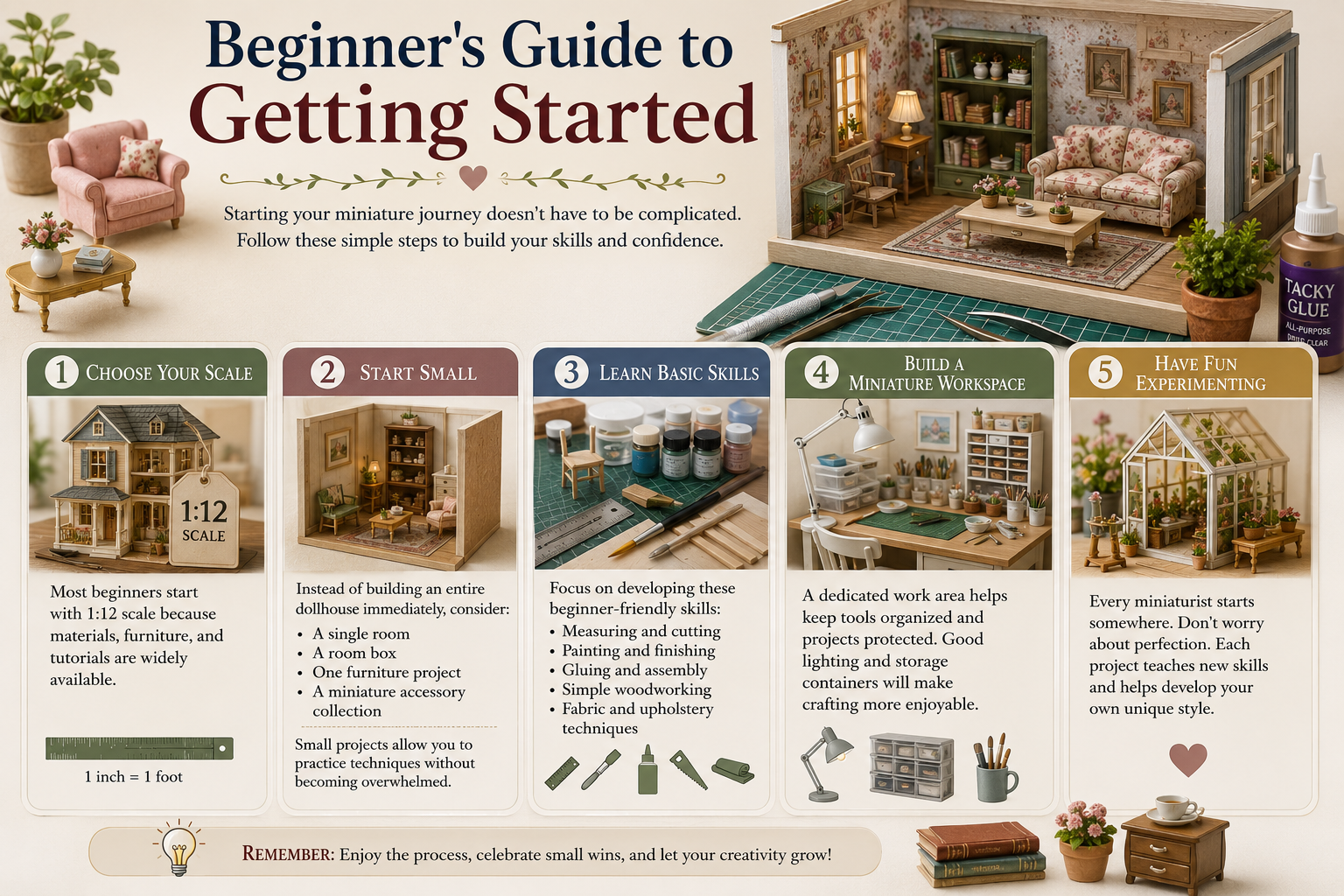
Beginner's Guide to Getting Started
Starting your miniature journey doesn't have to be complicated. Follow these simple steps to build your skills and confidence.
Step 1: Choose Your Scale
Most beginners start with 1:12 scale because materials, furniture, and tutorials are widely available.
Step 2: Start Small
Instead of building an entire dollhouse immediately, consider:
- A single room
- A room box
- One furniture project
- A miniature accessory collection
Small projects allow you to practice techniques without becoming overwhelmed.
Step 3: Learn Basic Skills
Focus on developing these beginner-friendly skills:
- Measuring and cutting
- Painting and finishing
- Gluing and assembly
- Simple woodworking
- Fabric and upholstery techniques
Step 4: Build a Miniature Workspace
A dedicated work area helps keep tools organized and projects protected. Good lighting and storage containers will make crafting more enjoyable.
Step 5: Have Fun Experimenting
Every miniaturist starts somewhere. Don't worry about perfection. Each project teaches new skills and helps develop your own unique style.
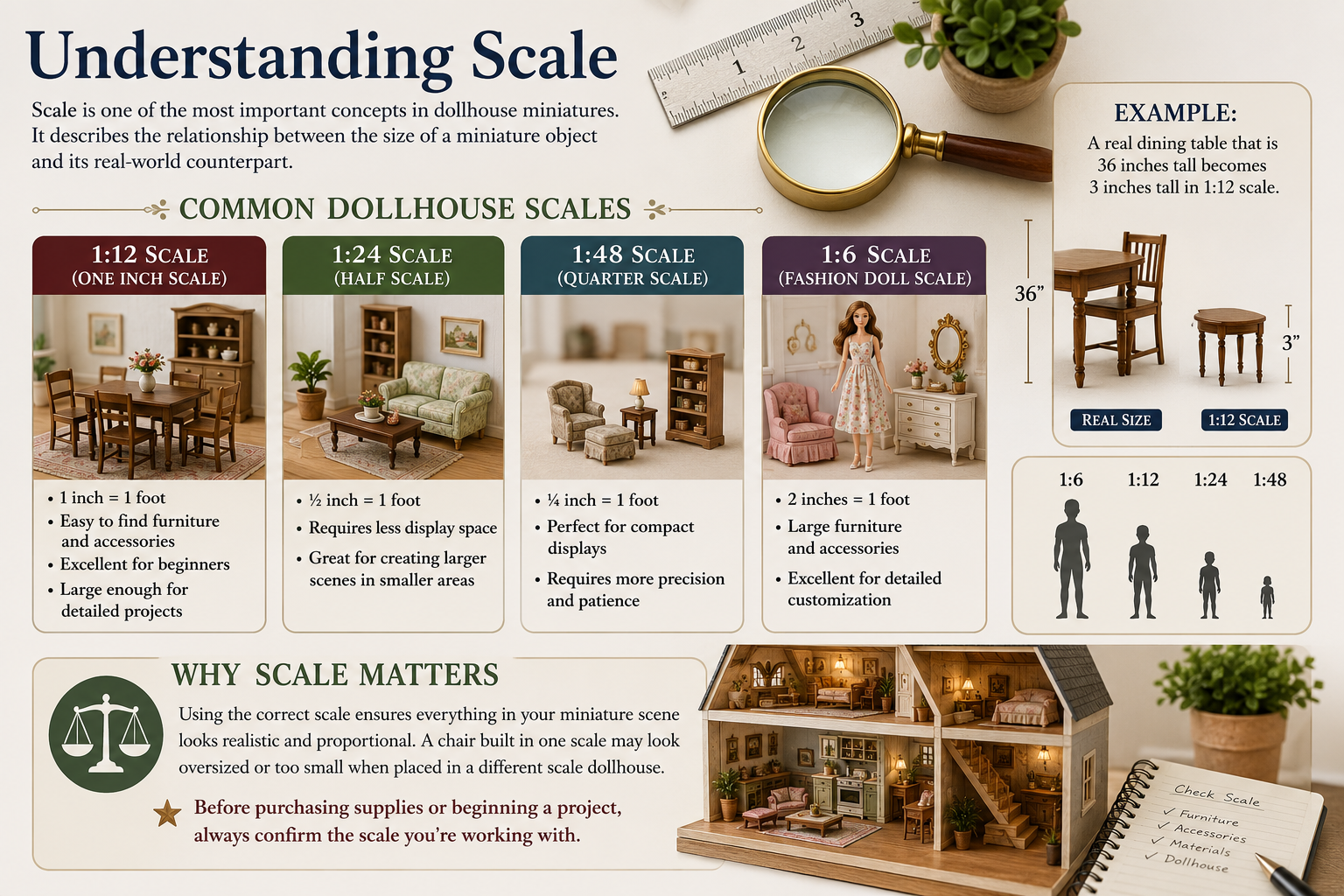
Understanding Scale
Scale is one of the most important concepts in dollhouse miniatures. It describes the relationship between the size of a miniature object and its real-world counterpart.
Common Dollhouse Scales
1:12 Scale (One Inch Scale)
The most popular dollhouse scale.
- 1 inch = 1 foot
- Easy to find furniture and accessories
- Excellent for beginners
- Large enough for detailed projects
Example:
A real dining table that is 36 inches tall becomes 3 inches tall in 1:12 scale.
1:24 Scale (Half Scale)
A smaller version of 1:12 scale.
- ½ inch = 1 foot
- Requires less display space
- Great for creating larger scenes in smaller areas
1:48 Scale (Quarter Scale)
Tiny but highly collectible.
- ¼ inch = 1 foot
- Perfect for compact displays
- Requires more precision and patience
1:6 Scale (Fashion Doll Scale)
Commonly used for fashion dolls and larger collectibles.
- 2 inches = 1 foot
- Large furniture and accessories
- Excellent for detailed customization
Why Scale Matters
Using the correct scale ensures everything in your miniature scene looks realistic and proportional. A chair built in one scale may look oversized or too small when placed in a different scale dollhouse.
Before purchasing supplies or beginning a project, always confirm the scale you're working with.
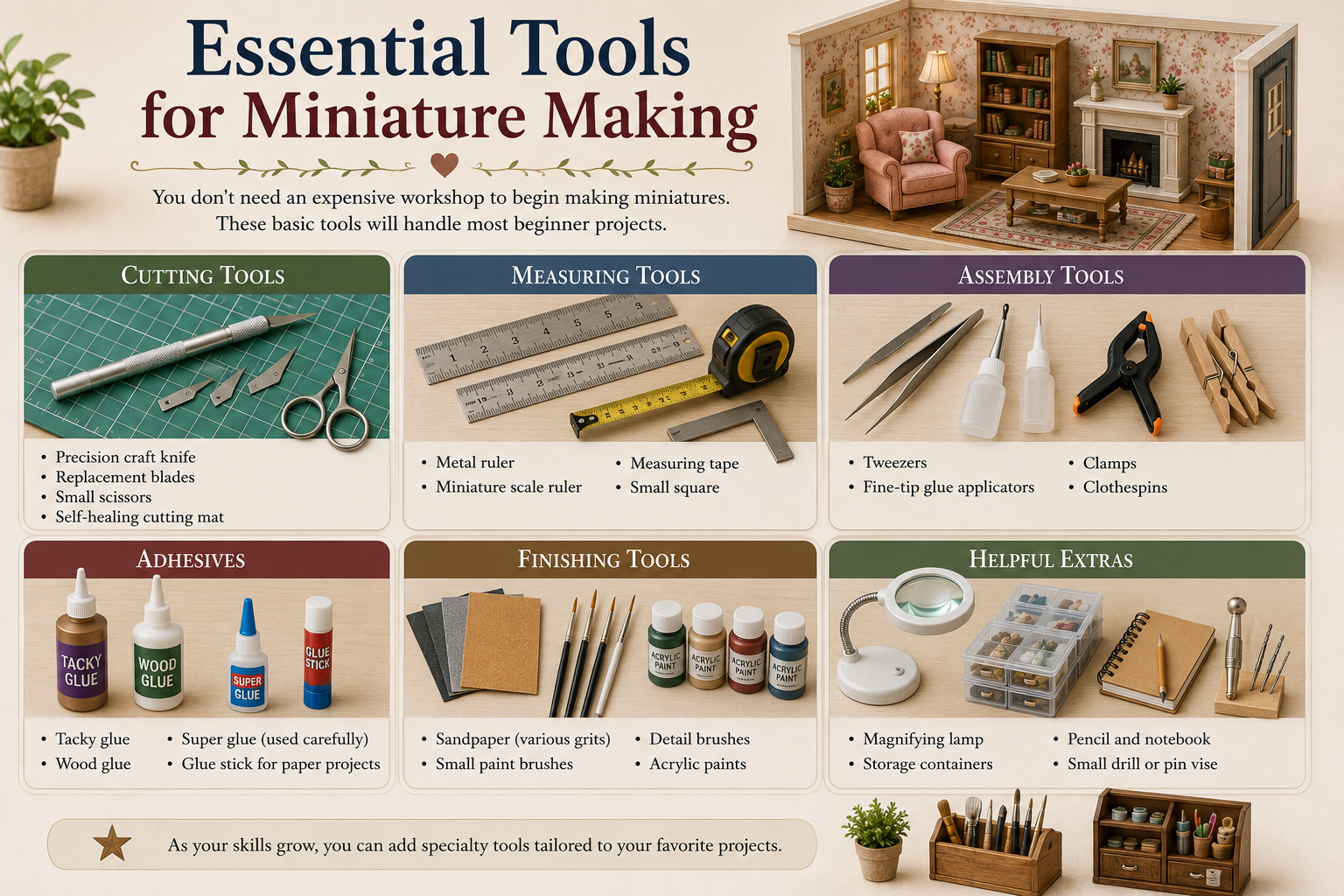
Essential Tools for Miniature Making
You don't need an expensive workshop to begin making miniatures. These basic tools will handle most beginner projects.
Cutting Tools
- Precision craft knife
- Replacement blades
- Small scissors
- Self-healing cutting mat
Measuring Tools
- Metal ruler
- Miniature scale ruler
- Measuring tape
- Small square
Assembly Tools
- Tweezers
- Fine-tip glue applicators
- Clamps
- Clothespins
Adhesives
- Tacky glue
- Wood glue
- Super glue (used carefully)
- Glue stick for paper projects
Finishing Tools
- Sandpaper (various grits)
- Small paint brushes
- Detail brushes
- Acrylic paints
Helpful Extras
- Magnifying lamp
- Storage containers
- Pencil and notebook
- Small drill or pin vise
As your skills grow, you can add specialty tools tailored to your favorite projects.
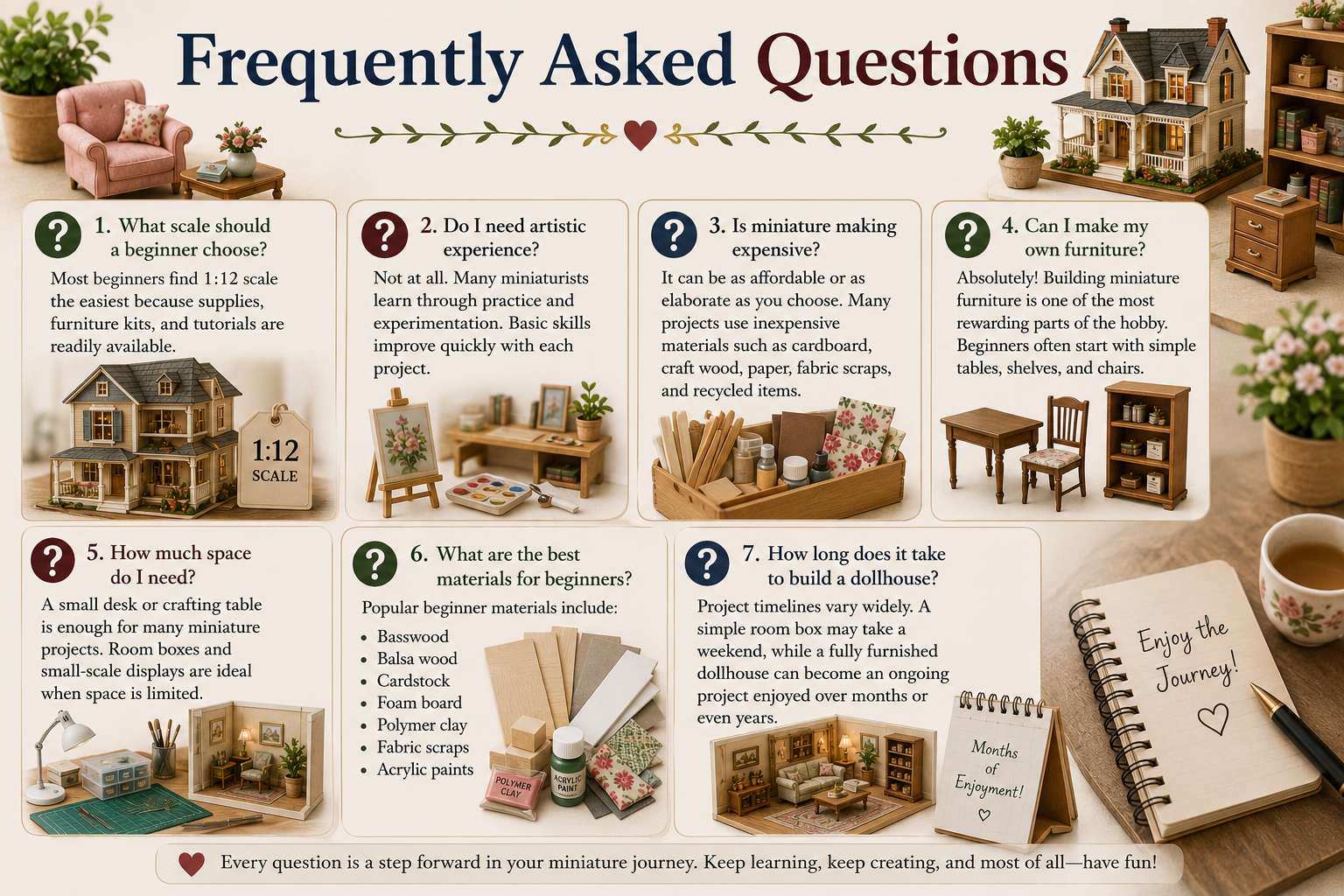
Frequently Asked Questions
What scale should a beginner choose?
Most beginners find 1:12 scale the easiest because supplies, furniture kits, and tutorials are readily available.
Do I need artistic experience?
Not at all. Many miniaturists learn through practice and experimentation. Basic skills improve quickly with each project.
Is miniature making expensive?
It can be as affordable or as elaborate as you choose. Many projects use inexpensive materials such as cardboard, craft wood, paper, fabric scraps, and recycled items.
Can I make my own furniture?
Absolutely! Building miniature furniture is one of the most rewarding parts of the hobby. Beginners often start with simple tables, shelves, and chairs.
How much space do I need?
A small desk or crafting table is enough for many miniature projects. Room boxes and small-scale displays are ideal when space is limited.
What are the best materials for beginners?
Popular beginner materials include:
- Basswood
- Balsa wood
- Cardstock
- Foam board
- Polymer clay
- Fabric scraps
- Acrylic paints
How long does it take to build a dollhouse?
Project timelines vary widely. A simple room box may take a weekend, while a fully furnished dollhouse can become an ongoing project enjoyed over months or even years.
Are You Ready to Begin?
The world of miniatures is filled with creativity, craftsmanship, and endless possibilities. Explore our tutorials, guides, scale calculators, project ideas, and community resources to begin your miniature-making adventure.
Start small, learn as you go, and most importantly—have fun creating your miniature world!